A Strategic Pullback in an Uncertain Trade Environment
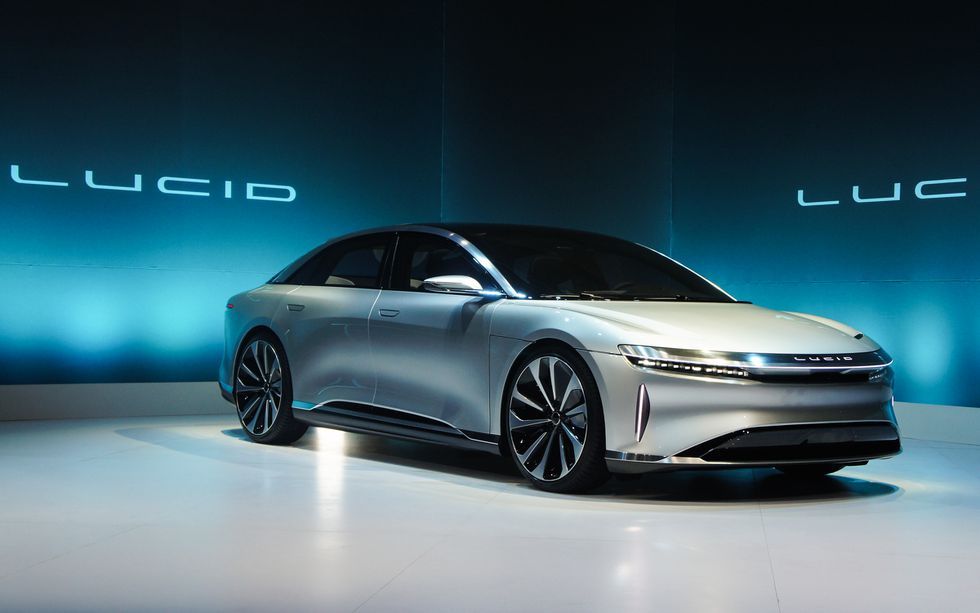
Lucid Motors, the California-based luxury electric vehicle (EV) manufacturer, has officially scaled back its 2025 production outlook amid an increasingly volatile global trade environment. The new guidance places vehicle production between 18,000 and 20,000 units, down from its previous target of 20,000. Though seemingly incremental, this shift underscores deepening concerns about tariff-driven inflation, supply chain bottlenecks, and the broader uncertainty surrounding global EV manufacturing. This marks the first time in over a year that Lucid has revised its forecast downward a symbolic move in an industry that has largely tried to project optimism amid mounting global and economic risks.
Weaker Financials Highlight Operational Strains
Alongside the reduced guidance, Lucid released Q2 earnings that fell short of market expectations. Revenues came in at $259.4 million, below analysts’ forecast of $279.9 million. The company also reported an adjusted loss of $0.24 per share, slightly wider than the projected $0.21. While deliveries increased year-over-year, financial pressures appear to be intensifying as a result of rising material costs, transport fees, and demand-side volatility.
Company executives attribute part of the drag to higher input costs due to tariffs, particularly those affecting specialized imports from China and Southeast Asia, such as EV batteries, motors, and microchips. The combination of lower revenue and higher per-unit costs is challenging Lucid’s path to profitability.
The Tariff Effect: Cost Inflation Meets Supply Chain Risk
Lucid’s struggles reflect a larger systemic issue: the weaponization of trade policy in the EV sector. Over the past year, U.S. tariffs on Chinese-made automotive parts, electronics, and rare-earth minerals have intensified, causing ripple effects across the EV supply chain. Lucid, though based in the U.S., relies on global suppliers for essential components many of which are now subject to double-digit import duties.
These import costs are further exacerbated by rare-earth export restrictions implemented by China in retaliation, constraining the supply of neodymium and dysprosium both vital for EV motor construction. As a result, analysts estimate a cost increase of $3,000–$4,500 per vehicle for manufacturers that haven’t fully localized their supply chains.
Strategic Reshoring & Industrial Alliances
In response, Lucid is accelerating efforts to localize its operations. The company recently signed multi-year agreements with Canadian lithium producers and U.S.-based electronics assemblers to secure a more stable and tariff-insulated supply base. These efforts align closely with the Biden administration’s reshoring agenda under the Inflation Reduction Act (IRA), which offers substantial tax credits and subsidies for domestically manufactured EVs.
Lucid’s new Arizona plant is also expected to serve as a regional hub for final vehicle assembly, with additional plans to co-locate battery module fabrication nearby. These moves are designed not only to mitigate tariff impacts but also to improve delivery timelines and increase Lucid’s eligibility for IRA-backed consumer incentives.
Gravity SUV & Affordable EVs: Anchors of the Future
Lucid’s current product strategy rests on a two-pronged approach: strengthening its luxury brand through the recently launched Gravity SUV, and expanding mass-market appeal through a forthcoming mid-size EV priced around $50,000.
The Gravity SUV, boasting over 400 miles of range and advanced driver-assistance capabilities, is positioned to rival Tesla’s Model X and Mercedes’ EQS SUV. Early reviews have praised its aerodynamics, interior minimalism, and software-first design elements Lucid sees as central to its brand DNA.
Meanwhile, the upcoming mid-size sedan, internally codenamed “Project Phoenix,” is aimed at penetrating the fast-growing mid-tier EV market. Slated for late 2026, it’s expected to offer a more affordable entry point for consumers, competing directly with Tesla’s Model 3 and Hyundai’s Ioniq 6.
Robotaxis & Ride-Hailing: A New Growth Engine
Lucid’s most disruptive move this year is its unexpected foray into autonomous mobility. In July, the company signed a $300 million agreement with Uber to supply more than 20,000 Gravity SUVs, pre-fitted for autonomous operation. This long-term partnership positions Lucid not just as a vehicle manufacturer, but as a strategic technology partner in the urban transportation ecosystem.
The first batch of Lucid-Uber robotaxis will roll out in San Francisco and Austin in early 2026, with broader deployment to follow. Lucid will provide over-the-air (OTA) vehicle performance support, while Uber handles AI integration and platform services.
This pivot not only diversifies Lucid’s revenue model it also reduces dependence on direct consumer sales and opens the door to high-margin, recurring fleet contracts, positioning the company as a hybrid OEM–mobility infrastructure provider.
Competitive Landscape: EVs in a Squeeze
While Lucid pushes ahead with innovation and diversification, it faces intensifying competition. Tesla continues to dominate the premium and mid-market segments, recently announcing price cuts across its fleet to protect market share. Rivian, once seen as Lucid’s closest rival, has shifted toward fleet and commercial vehicles, landing deals with Amazon and FedEx.
Emerging players like Fisker and VinFast are also crowding the EV arena, bringing new designs and price points to global markets. For Lucid, brand loyalty, software experience, and battery technology remain the levers to defend its niche and scale further.
Investor Reaction: Anxiety Tempered by Long-Term Optimism
Lucid’s stock declined by over 10% in the hours following its earnings release, reflecting investor disappointment over missed targets. However, some long-term shareholders remain bullish.
“Lucid has a differentiated product, strong leadership, and cash to weather storms,” said Daniel Rivas, lead EV analyst at Westford Capital. “This isn’t about quarterly misses it’s about surviving the global reset happening in manufacturing and trade.”
Lucid currently holds over $4.6 billion in liquidity, with no major debt maturities until late 2026, giving it a buffer to execute its long-term roadmap.
Agility in an Era of Disruption
Lucid Motors’ story is no longer just about delivering a beautiful EV it’s about surviving and thriving in a new era of economic nationalism, regulatory flux, and technological disruption. From reshoring battery components to launching a robotaxi fleet with Uber, the company is pivoting rapidly to maintain relevance and resilience.
Whether Lucid can scale fast enough and efficiently enough to meet investor expectations will depend on its ability to manage supply shocks, capture new revenue verticals, and stay ahead of policy shifts.
What’s clear is that in 2025, success in the EV space will be measured not just by how far you can go on a single charge but by how far you can adapt in a single quarter.